
Why Most Employee Advocacy Programs Fail, And How to Fix It

The Promise of Employee Advocacy
When an employee advocacy program works, the impact is hard to ignore. Messages travel further through personal networks, interactions feel more genuine, and people engage because they trust the person behind the post.
For organizations that actively invest in their brand and people, especially those relying on digital channels to grow awareness and attract talent, advocacy becomes a natural extension of how they show up.
It can strengthen employer branding, support social selling efforts, and help you stay visible where it matters most.
Yet many teams don’t see these results. Not because the idea is flawed, but because the foundation isn’t there.
Where Most Programs Go Off Track
A lot of employee advocacy programs are built on a simple assumption: if you give people content, they will share it.
So teams roll out a platform, prepare campaigns, and encourage employees to participate. In the beginning, this often works. A motivated group jumps in, shares content, and creates early momentum.
But over time, that momentum becomes harder to maintain. Participation drops, enthusiasm fades, and the program starts to feel like an obligation rather than an opportunity.
The issue isn’t the platform. It’s that most employees were never truly prepared to take part.
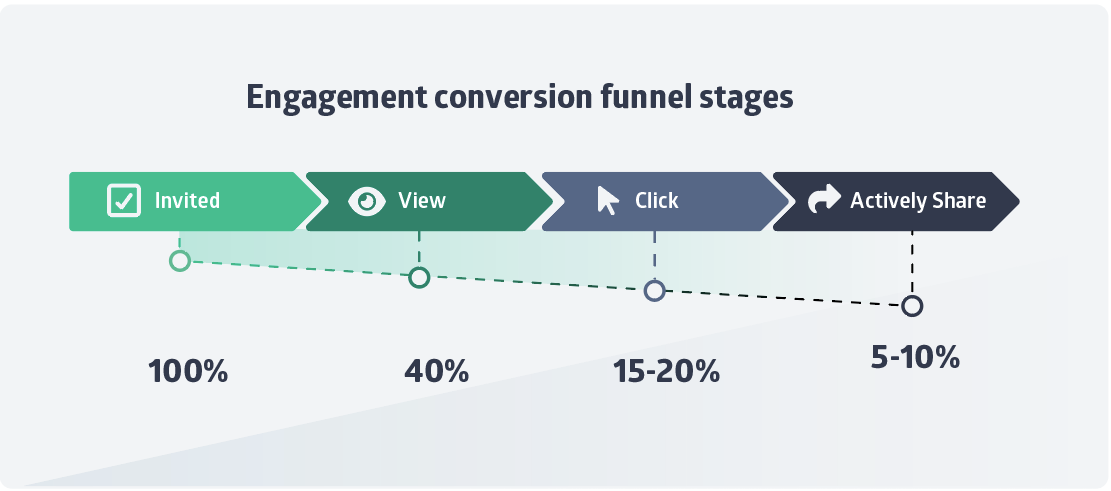
Employee Advocacy Readiness is the Missing Piece
Being active on social media doesn’t automatically mean someone feels confident sharing professional content. Many employees hesitate because they’re unsure what to say, how to say it, or whether it aligns with the company’s voice.
Employee advocacy readiness is about more than access. It’s about confidence, clarity, and comfort.
Employees need to understand what’s expected, feel aligned with the message, and trust that they can contribute in their own way. Without that foundation, even the best tools will only activate a small group of already engaged people.
That’s why so many programs plateau early. The challenge isn’t distribution. It’s helping people feel ready to participate.
What successful programs do differently
Organizations that see long-term success take a different approach. They don’t start by pushing content out. They start by understanding their people. Instead of asking who will share, they focus on who feels ready and what others need to get there.
How social is your workforce, really?
This shift changes the dynamic completely. Advocacy becomes something you build together, not something you ask people to do.
Successful programs invest in guidance, offer support, and create space for employees to grow into their role as advocates. They treat advocacy as a journey, not a one-time campaign.
How to get your program back on track
If your employee advocacy program isn’t scaling the way you expected, adding more content or new tools won’t solve it. What you need is clarity on where your people stand today and how to support them moving forward.
Start by understanding your current level of employee advocacy readiness. From there, you can identify what’s holding people back, whether that’s confidence, consistency, or clarity around messaging.
But insight alone isn’t enough. The real impact comes from what you do next.
The gaps you uncover are your starting point for skill enablement. By providing practical support, examples, and lightweight training, you help employees build the confidence to participate in a way that feels natural.
This is where many programs fall short. When you combine both, measurement and enablement, advocacy becomes something people grow into, not something they’re pushed into.
Start with clarity, not assumptions
Many organizations launch an employee advocacy program based on assumptions. They assume employees are ready, that participation will follow, and that tools will drive engagement.
But without a clear understanding of your starting point, it’s difficult to build something that lasts.
An employee advocacy assessment gives you that clarity. It shows you where your people are today. Skill enablement helps you move them forward.
Together, they create a system that supports real, sustainable participation.
Measure your employee advocacy readiness
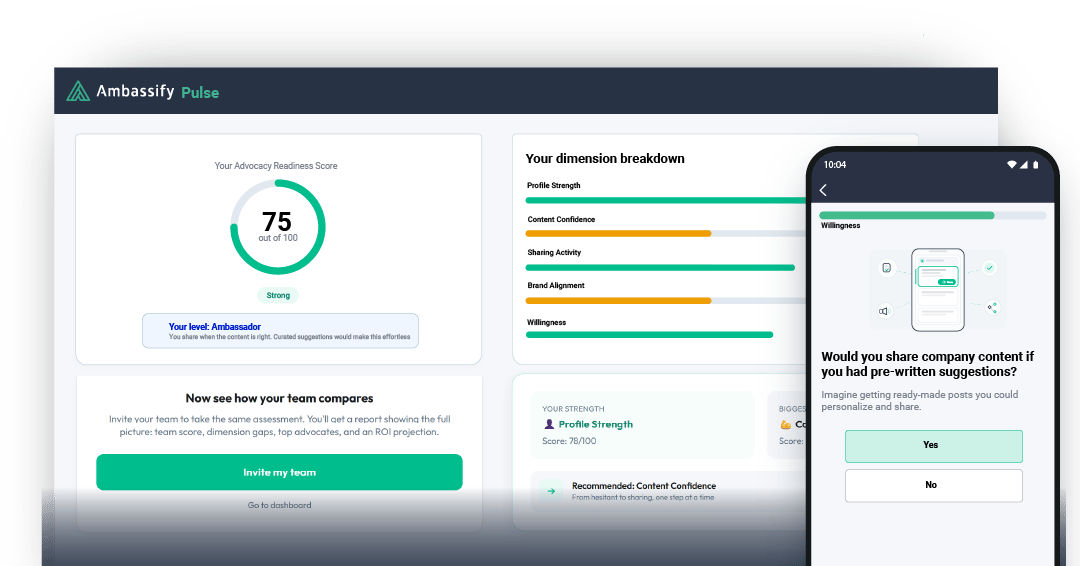
Before you try to scale your program, take a step back and understand where your team stands.
An employee advocacy assessment like Pulse helps you replace guesswork with real data. In just a few minutes, you can:
- Get a clear readiness score (0-100)
- Identify gaps across your team
- Understand what’s holding participation back
- Know exactly what to improve
From there, you can take the next step. Use those insights to guide your enablement efforts and support employees in building the skills and confidence they need to contribute. No assumptions. Just clear, actionable insight.